
Smoke and soot do not just sit on surfaces — they migrate into HVAC systems, behind walls, and into porous materials like upholstery and drywall paper. Surface cleaning alone leaves the smell behind.
Our process: secure the structure if needed, document the loss for your carrier, contents pack-out (we inventory and clean salvageable items off-site), structural soot removal, thermal fogging or hydroxyl treatment for odor neutralization, then rebuild. We coordinate with your adjuster at every stage, and we handle the Harris County permit work the rebuild requires once the carrier signs off on scope.
Why the smell comes back after a surface clean
Smoke particulate is small enough to travel wherever air travels. It settles into HVAC ductwork, migrates behind outlet plates and baseboards, and binds into porous materials such as drywall paper, upholstery, carpet backing, and unfinished wood in attics and cabinet interiors.
Wiping visible soot off visible surfaces removes maybe the part you can see. The odor lives in the parts you cannot, which is why a house can look clean and still announce itself the moment the AC kicks on in July.
What kind of soot you have changes the cleaning
Not all soot behaves the same way, and using the wrong method sets a stain permanently.
- Dry soot from a fast, high-oxygen fire is powdery and lifts with dry methods first. Wetting it too early smears it into the substrate.
- Wet soot from a slow, smoldering, low-oxygen fire is sticky and greasy and needs solvent-based cleaning.
- Protein residue from a kitchen fire is nearly invisible, discolors paint and varnish, and carries an intense odor. It is the one homeowners most often underestimate because there is so little to see.
The odor step is a separate process, not a stronger cleaner
Once the soot is out, remaining odor is treated at the molecular level rather than covered. Depending on the loss that means thermal fogging, hydroxyl generation, or ozone in unoccupied spaces, followed by sealing surfaces that cannot be fully cleaned.
Air scrubbing during the work keeps particulate from re-depositing on the areas already finished, which is the difference between cleaning a house once and cleaning it twice.
Water damage almost always comes with fire damage
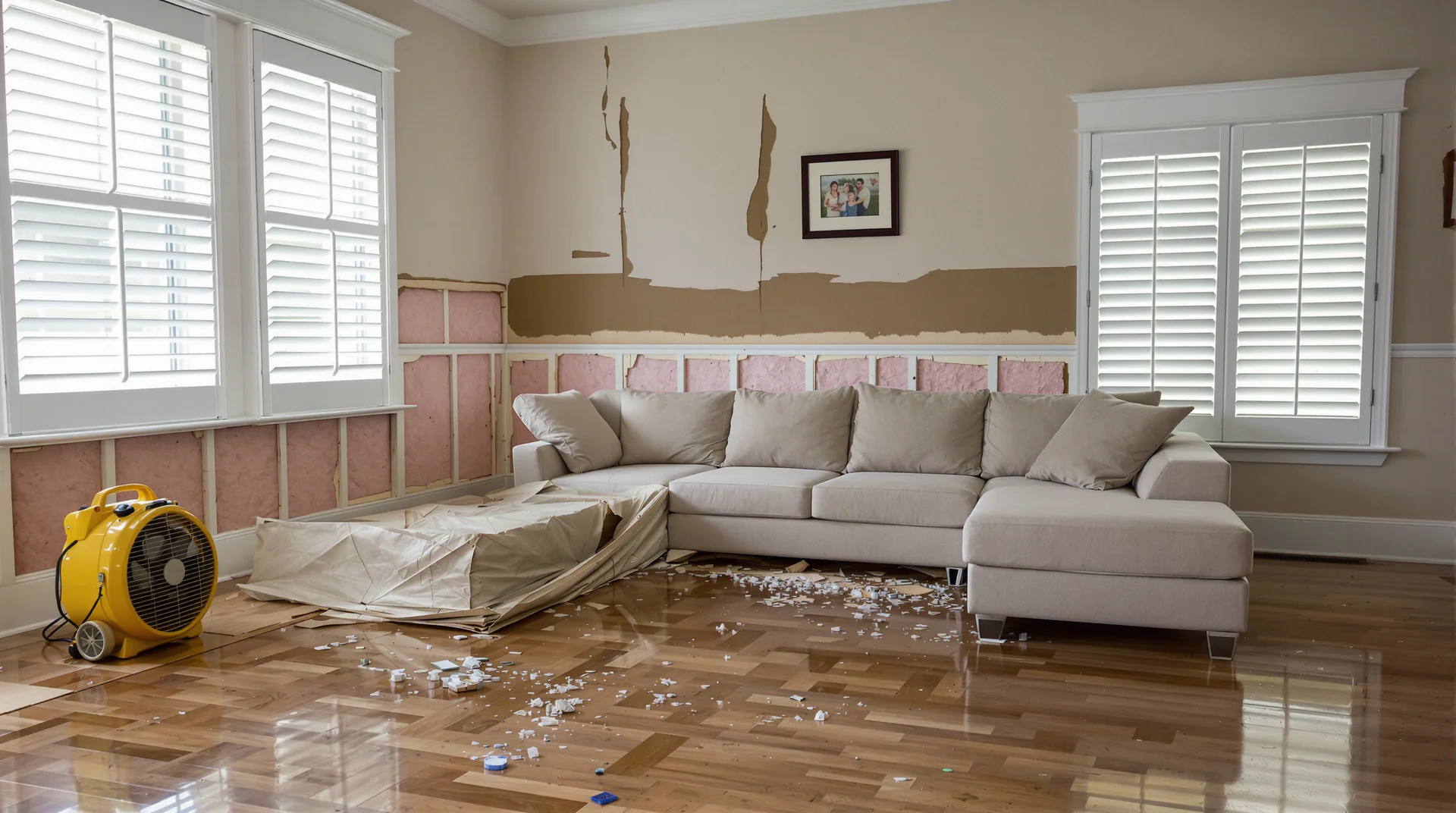
The fire department puts the fire out with water, and that water is now a second loss inside the same building, usually a Category 2 by the time anyone gets to it. A fire job that ignores the drying half ends with a structurally sound, odor-free house that grows a moisture problem in the walls a month later. We run both, and structural drying starts the same day where it needs to.
Where we work
Dispatched from our Katy staging area, 24/7, across Katy, Fulshear, Cinco Ranch, Richmond, Sugar Land, Cypress, and Houston. We handle the permit work the rebuild requires once your carrier signs off on scope, and the same crew does the reconstruction.