
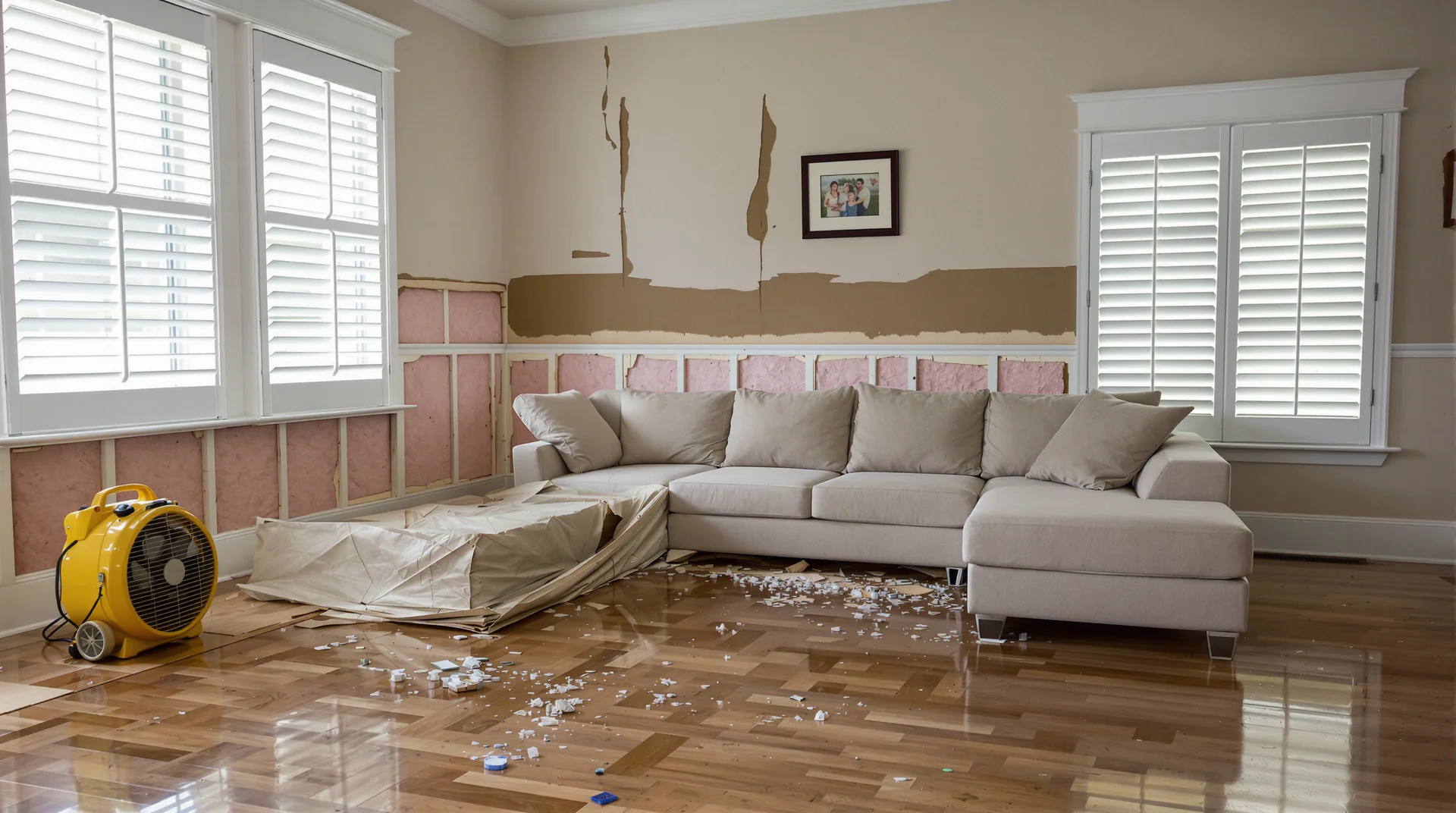
Category 3 water (sewage backup, toilet overflow with feces, rising flood water that contains contaminants) is the most hazardous water loss class. Across Katy and west Houston, the common trigger is municipal-line backflow during heavy rain events — when Brays or Buffalo Bayou overtop their banks, the entire neighborhood drainage system can reverse into low-line homes. Affected porous materials (carpet pad, drywall up to the water line, particle board) cannot be salvaged — they must be removed under containment.
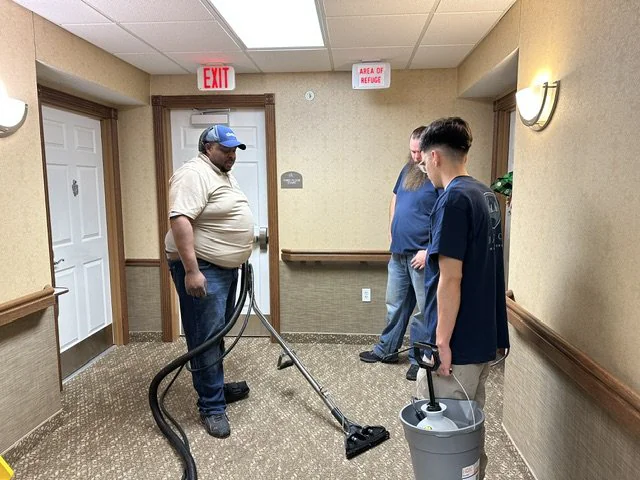
We wear PPE, contain the work area, remove non-salvageable contents and structure, apply EPA-registered disinfectants, and verify safe conditions with ATP testing or similar pre-occupancy clearance before any rebuild starts.
Why sewage is not “water damage with a smell”
Category 3 water carries pathogens, and that changes the rules from drying to decontamination. The governing question stops being “can this be dried” and becomes “was this contacted.”
Porous and semi-porous materials that took Category 3 water do not get dried and saved. Carpet and carpet pad, drywall to above the contact line, particle board, insulation, and upholstered furniture come out under containment and get disposed of. Non-porous surfaces such as tile, sealed concrete, and finished hardwood can often be cleaned and sanitized rather than removed.
That is not us being cautious for the invoice. It is that a dried contaminated porous material is still a contaminated material.
What a correct sewage job looks like
- Containment first. Negative air and physical barriers so contaminated air does not migrate to the rest of the house.
- PPE for everyone in the space. Not optional and not theater.
- Bulk removal and controlled demolition of contacted porous materials.
- Cleaning and application of EPA-registered disinfectants on remaining surfaces.
- Structural drying of what is left.
- Post-remediation verification before anything gets closed back up or reoccupied.
What not to do before we arrive
Do not run a shop vac or a household wet vac over it. Do not run a fan into the space, which aerosolizes contamination and moves it into clean parts of the house. Keep children and pets out of the area entirely. If the backup involves a sewer main rather than a fixture, stop using water in the house, because every flush and every drain adds to it.
Is it covered?
A sudden sewer backup is a covered peril under many Texas homeowners policies, but frequently only if you carry a specific water or sewer backup endorsement, which is a common gap. Rising surface water carrying contaminants is flood, which needs NFIP or private flood coverage. Check your declarations page for a backup endorsement before you assume either way, and see our insurance claims walkthrough.
Where we work
Dispatched from our Katy staging area, 24/7, across Katy, Fulshear, Richmond, Sugar Land, Cypress, and Houston.