

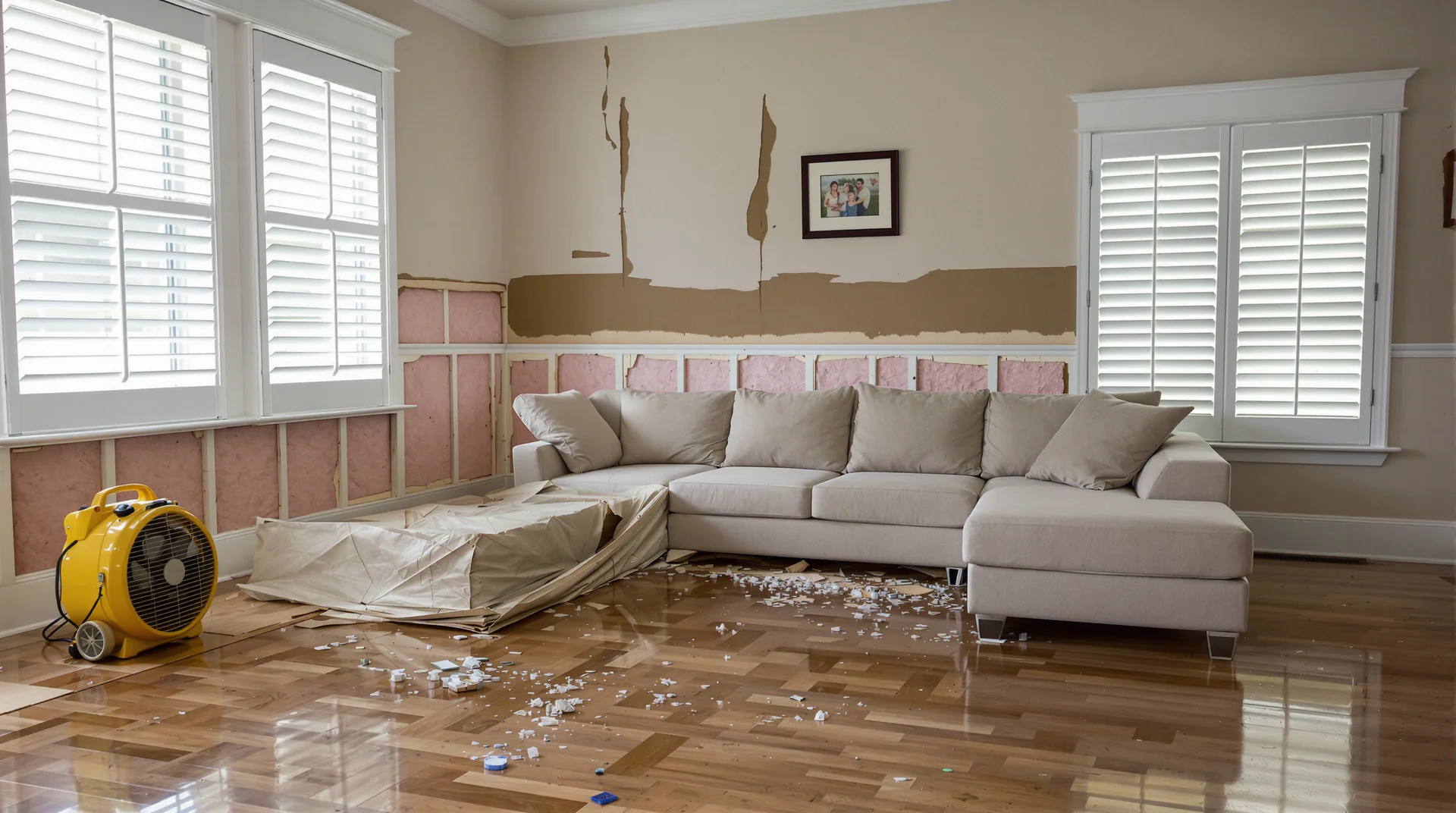
Houston water losses look different than the suburbs, and we work the west side of the city: Memorial, the Energy Corridor, Spring Branch, Bellaire, and the neighborhoods along Buffalo Bayou.
Why Houston losses behave differently
Inside the 610 Loop, homes sit on top of decades of slab pours that flex with the expansive clay underneath, and that movement is what cracks the copper supply lines you never see until water shows up at a baseboard. Add the bayous, Buffalo Bayou cutting through Memorial and the Energy Corridor and White Oak Bayou through the Heights, and a single tropical system can put feet of water through a first floor that was dry an hour earlier.
The other Houston-specific factor is humidity. The urban heat island keeps interior dew points high for most of the year, which means a wet wall cavity that would dry out in three days in a drier climate stays wet here long enough to seed microbial growth in about 48 hours. That is why our first move on any Houston job is moisture mapping: pinpointing where the water actually migrated rather than where you can see it, so the drying plan handles the cavity behind the wall and not just the visible damage.
The two scenarios that drive most of our Houston calls
Bayou overflow during tropical systems. Memorial, the Energy Corridor, and the homes backing the bayou take the brunt, and the National Weather Service flood-stage gauges are the early warning we watch year-round.
Slow slab leaks under Memorial-area homes. The clay swells and shrinks with the season, copper supply lines crack at the joints, and the first sign is usually a warm spot on the tile floor or an unexplained jump in the water bill. By the time a baseboard shows damage, the slab has been wet for weeks.
Which one is covered, and which one is not
Those two scenarios sit on opposite sides of the coverage line, which is worth being blunt about.
- Bayou water rising into the house is flood. Every standard homeowners policy excludes it. Covering it requires a separate NFIP or private flood policy.
- A slab leak, a cracked supply line, a failed water heater, or an overflowing appliance is not flood. Water that originates inside the house is a sudden and accidental loss and is the standard covered peril under a Texas homeowners policy.
Houston homeowners have lived through enough bayou flooding to assume the worst about coverage, and a lot of perfectly valid interior-origin claims never get filed because of it. Where the water started decides the peril.
Read our insurance claims walkthrough before deciding not to file. The West Houston Homeowner’s Guide to Water Damage and Insurance Claims covers Texas Insurance Code Chapter 542 prompt-pay deadlines, actual cash value versus replacement cost, and recoverable depreciation in full.
What to do in the first hour
- Shut the water off at the main if the source is inside the house.
- Photograph and video everything before you move anything.
- Call us. Mitigation satisfies your policy’s duty to prevent further damage.
- Then open the claim. Chapter 542 deadlines run from notice.
- Do not sign an Assignment of Benefits. We never ask for one.
Given how fast a wet cavity turns in this climate, the gap between “I’ll deal with it tomorrow” and “I called someone tonight” is the difference between drying materials in place and removing them.
Getting to you in Houston
We stage out of Katy, so Houston is the longest run on our service map and typical response is at the far end of our 25 to 45 minute range, longer for addresses well east of the Loop. The truck still rolls within five minutes of your call.
The phone is answered around the clock by the crew on rotating on-call shifts rather than an answering service, and the crew is bilingual in English and Spanish. We are IICRC certified in Water Damage Restoration and Applied Structural Drying, we bill carriers directly and write estimates in Xactimate, and the same crew that runs the demolition handles the rebuild. Estimates are free.
We also serve Katy, Cinco Ranch, Fulshear, Cypress, Richmond, and Sugar Land.