
Katy is where we stage, so it is the city we know in the most detail and the one we reach fastest. It is also the city with the most misunderstood flood risk in the Houston metro, and that misunderstanding costs homeowners real money on claims.
What actually causes water damage in Katy homes
Two windows produce most of our Katy call volume. January freezes burst hose bibs and the supply lines running through unconditioned attic space, and the long Houston cooling season backs up AC condensate drains into ceilings.
The AC scenario is the one most Cinco Ranch and Cane Island homeowners never see coming. A two-dollar PVC fitting fails behind the air handler and quietly dumps a season’s worth of condensate into master bedroom drywall. By the time a stain appears on the ceiling, the wall cavity above it has been wet for weeks.
The rest is slab leaks from settling on expansive clay, storm-driven roof leaks, and appliance supply failures.
The Addicks and Barker flood pools, and why “I’m not in a flood zone” is not the whole answer
The Addicks and Barker Reservoirs were built to hold stormwater back from downtown Houston. Over the decades that followed, development was permitted inside the reservoir basins themselves, and roughly 14,000 homes now sit within them.
A flood pool is the land a reservoir uses to store water during an extreme rain event. It is not the same thing as a mapped 100-year floodplain, and a property can sit outside the floodplain and inside the flood pool at the same time. During Hurricane Harvey, pooling behind the dams and the controlled releases that followed put water into thousands of Katy-area homes that were not in any mapped flood zone. Parts of Cinco Ranch, Kelliwood, and Canyon Gate were among them, and many of those owners learned they were inside a flood pool only after the water arrived.
Texas law changed because of that. Senate Bill 339 took effect on September 1, 2019, and the statutory seller’s disclosure notice now asks whether a property sits wholly or partly in a 500-year floodplain, a flood pool, or a reservoir. Before that date, sellers were only required to disclose the 100-year floodplain. If you bought your Katy home before September 2019, nobody was legally obligated to tell you.
That matters for insurance. Water that pools in from a reservoir is flood, which a homeowners policy excludes and which requires separate NFIP or private flood coverage. A pipe that bursts inside your wall is a sudden and accidental loss, which your homeowners policy covers. Those are different perils with different money behind them, and the difference is where the loss started, not how much water ended up on your floor.
What that means practically
If you are inside a flood pool, that is an argument for carrying flood insurance, not an argument that your homeowners policy is worthless. The overwhelming majority of Katy losses we respond to are the second kind: supply lines, water heaters, appliances, and AC condensate. Those are covered, and homeowners talk themselves out of filing on them surprisingly often.
Read our insurance claims walkthrough before deciding not to file, and the West Houston Homeowner’s Guide to Water Damage and Insurance Claims covers Texas Insurance Code Chapter 542 prompt-pay deadlines, actual cash value versus replacement cost, and recoverable depreciation in full.
What to do in the first hour
- Shut the water off at the main if the source is inside the house.
- Photograph and video everything before you move anything. Wide shots of each room, then close-ups of the failure point. It takes four minutes and it is the highest-value thing a homeowner does.
- Call us. Mitigation satisfies your policy’s duty to prevent further damage.
- Then open the claim. Chapter 542 deadlines run from notice.
- Do not sign an Assignment of Benefits. We never ask for one.
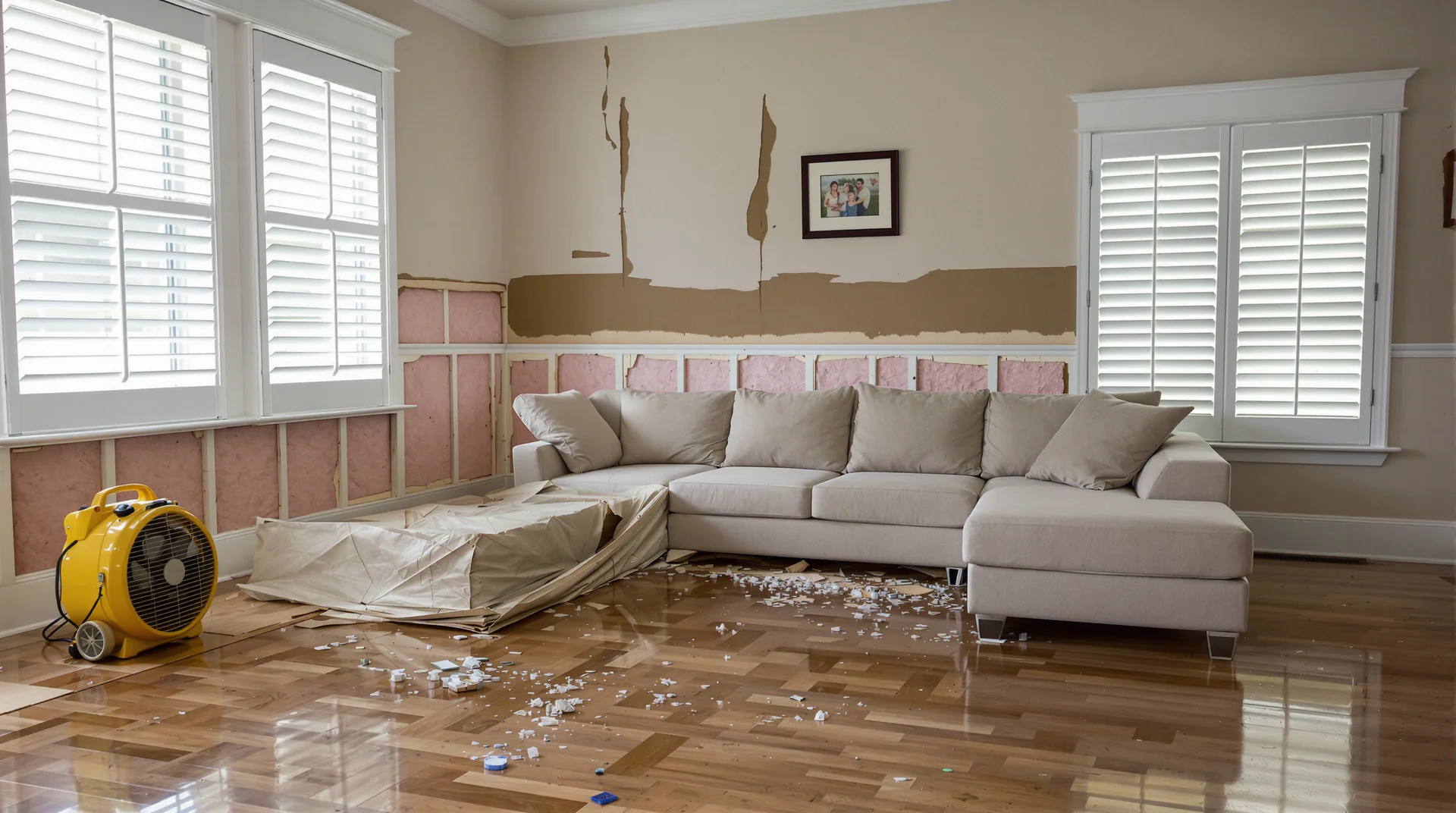
Do not run box fans over standing water and call it dry. Air movement without dehumidification pushes moisture into wall cavities and framing rather than removing it from the building, and it is the most common reason we get called back to a house someone already tried to dry.
Getting to you in Katy
We are dispatched from inside the Katy city limits, so this is the shortest run we make. The truck rolls within five minutes of your call and typical response across the service area is 25 to 45 minutes, with Katy and the close-in communities at the fast end.
The phone is answered around the clock by the crew on rotating on-call shifts rather than an answering service, and the crew is bilingual in English and Spanish. We are IICRC certified in Water Damage Restoration and Applied Structural Drying, we bill carriers directly and write estimates in Xactimate, and the same crew that runs the demolition handles the rebuild. Estimates are free.
For the paid-search detail page on this service, see water damage in Katy. We also serve Cinco Ranch, Fulshear, Cypress, Richmond, and Sugar Land.